Advanced Research Training for Life Sciences & Biotechnology Dissertations 2025
Explore advanced laboratory and computational training for biotechnology and life sciences dissertations in 2025, including cell culture, NGS, PCR, and molecular docking.
 Ankita Shastri
Nov 25, 2025 12:15
1142
0
Ankita Shastri
Nov 25, 2025 12:15
1142
0

A successful dissertation requires more than an innovative topic. It demands scientific literacy, technical proficiency, analytical rigor, and the ability to defend research outcomes with confidence. In 2025, the expectations for life sciences and biotechnology dissertations continue to rise, with reviewers and institutions valuing projects that demonstrate experimental accuracy, computational depth, authentic data interpretation, and relevance to global research challenges.
As the life sciences field evolves, students must acquire not only traditional laboratory techniques but also in-silico tools and interdisciplinary skill sets. Structured dissertation-oriented training plays a critical role in bridging classroom knowledge with hands-on experimentation and computational analysis.
Why Specialized Training Is Crucial for Dissertation Success
- Modern dissertation evaluation prioritizes:
- Research ethics and reproducibility
- Technical skill and experimental accuracy
- Data interpretation and statistical justification
- Domain relevance and literature integration
- Reporting style, visuals, and scientific communication
Students who receive research-focused training early in their dissertation timeline are more prepared to troubleshoot experiments, manage time efficiently, meet research milestones, and produce high-quality data suitable for publication.
Drug Discovery and Molecular Docking
Training in drug discovery and molecular docking begins with a deep understanding of protein structure, ligand interaction, and therapeutic target selection, enabling students to identify biologically relevant macromolecules for computational drug screening. Coursework includes virtual screening, molecular docking, and scoring functions, ensuring students can predict binding affinity between drug candidates and protein targets using tools such as AutoDock, Schrödinger, and PyRx. The module also emphasizes ADMET and pharmacokinetic profiling, equipping learners with the ability to filter compounds based on absorption, metabolism, toxicity, and clearance. Importantly, students are guided through the interpretation and validation of docking results, linking computational predictions with biological relevance and future wet-lab experimentation. This training significantly enhances dissertation quality by enabling the development of research questions rooted in real-world pharmaceutical pipelines.
Bioinformatics and Computational Tools
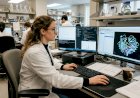
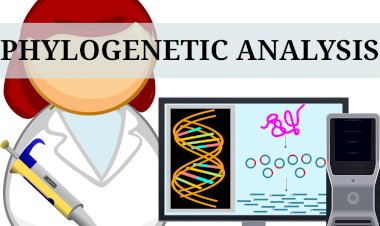
The bioinformatics module begins with mastering biological databases, sequence retrieval, and homology searches, enabling students to make full use of NCBI, UniProt, and EMBL data for molecular research. Training incorporates multiple sequence alignment, phylogenetic analysis, and structural prediction, helping students understand evolutionary patterns and structure–function relationships. Students gain proficiency in software and tools such as BLAST, Clustal Omega, MEGA, Swiss-Model, and PyMOL, ensuring they are equipped for computational structure analysis and visualization. Additionally, emphasis is placed on R and Python-based data analysis, empowering students to work with biological datasets, generate publication-quality graphs, and automate workflows. This module strengthens dissertation projects by bridging computational predictions with experimental hypotheses and generating evidence-based conclusions.
NGS and Omics Data Analysis
Training in Next-Generation Sequencing and omics-based data analysis provides exposure to the complete sequencing workflow, including raw data quality checks, trimming, alignment, annotation, and interpretation. Students learn to work with RNA-seq, DNA-seq, metagenomics, and proteomics datasets, enhancing their ability to address complex biological questions through high-throughput data. Software training includes FASTQC, Trimmomatic, HISAT2, STAR, SAMtools, and DESeq2, enabling accurate quantification, normalization, and differential expression analysis. Students are also introduced to functional enrichment tools such as DAVID, KEGG, and GO, helping them connect gene-level observations with biological pathways and disease relevance. This specialized training elevates dissertation work by incorporating computational depth, reproducibility, and cutting-edge multi-omics approaches.
PCR and Gel Electrophoresis
The PCR and electrophoresis training begins with primer design, template preparation, and reaction optimization, enabling students to amplify target DNA with precision. Learners are trained in gradient PCR, qPCR, touchdown PCR, and RT-PCR, allowing them to choose the correct amplification strategy based on research requirements. The workflow also includes agarose and PAGE-based electrophoresis, focusing on band resolution, quantification, and DNA fragment assessment. Students gain troubleshooting expertise in non-specific amplification, primer dimer formation, low yield, and contamination, which are critical for producing clean and consistent results. This training provides a strong molecular foundation that supports dissertation projects involving gene expression, cloning, microbial identification, and genetic polymorphism studies.
Microbial Identification and Antibiotic Sensitivity Testing
Training in microbiology begins with isolation, culturing, staining, and characterization of microbial species, offering students hands-on exposure to both pathogenic and non-pathogenic organisms. Modules cover biochemical profiling, molecular identification, and 16S rRNA sequencing, enabling accurate taxonomic classification and microbial diversity assessment. Students also gain proficiency in antibiotic sensitivity assays using disc diffusion, MIC, and MBC methods, contributing to research related to drug resistance and antimicrobial screening. Emphasis on sterile technique, contamination prevention, and biosafety protocols ensures safe and reliable laboratory operations. This training strengthens dissertation-level research by combining classical microbiology with modern molecular methodologies.
Choosing the Right Training Program - Key Indicators of Quality
An effective dissertation-oriented training program typically demonstrates:
|
Indicator |
Outcome |
|
Hands-on lab exposure |
Confidence in experimental execution |
|
Real datasets and research problems |
Readiness for dissertation work |
|
Expert mentorship |
Faster troubleshooting and better planning |
|
Project-based learning |
Stronger results and publication potential |
|
Documentation and presentation guidance |
Smooth dissertation and viva |
Students trained under such frameworks not only excel in their dissertations but also become competitive candidates for research positions, industry roles, and doctoral programs.
IBRI Noida - Supporting Dissertation Excellence in Life Sciences and Biotechnology
IBRI Noida provides specialized research-oriented training designed to support students preparing for their bachelor’s training or MSc, MTech, and BTech dissertations. The institute offers hands-on laboratory and computational programs across molecular biology, NGS and omics analysis, bioinformatics, drug discovery and docking, microbiology, and cell culture. Training is project-based, enabling students to generate dissertation-ready datasets under the supervision of experienced faculty. With advanced laboratory infrastructure and a curriculum aligned to industry and academic expectations, IBRI ensures students acquire the technical, analytical, and scientific communication skills necessary to complete their dissertation successfully and prepare for future careers in biotechnology, pharmaceuticals, and research.